 DialerGiants
Introduction
In today's fast-paced business landscape, delivering exceptional customer experiences is paramount for driving loyalty and growth. One crucial component that underpins this goal is call routing, a sophisticated technology that ensures incoming calls are directed to the most suitable agent or department, maximizing efficiency and satisfaction. Call routing is more than just a technical process; it's a strategic tool that significantly impacts customer experience, operational efficiency, and overall business productivity.
As an expert in call center technology and customer experience optimization, I've witnessed firsthand how effective call routing can transform a business. It not only streamlines operations by reducing wait times and improving first-call resolution rates but also enhances customer satisfaction by ensuring that each caller reaches the right person with the right expertise.
What is Call Routing?
Call routing is a sophisticated, automated system designed to efficiently direct incoming calls to the most suitable agent or department within an organization. This intelligent process operates based on dynamic, predefined rules that consider a range of factors, including agent availability, caller location, business hours, and agent skill sets. By leveraging these variables, call routing ensures that customers are quickly connected to the right person who can address their specific needs, thereby enhancing their overall experience.

How Does Call Routing Work? A Step-by-Step Breakdown
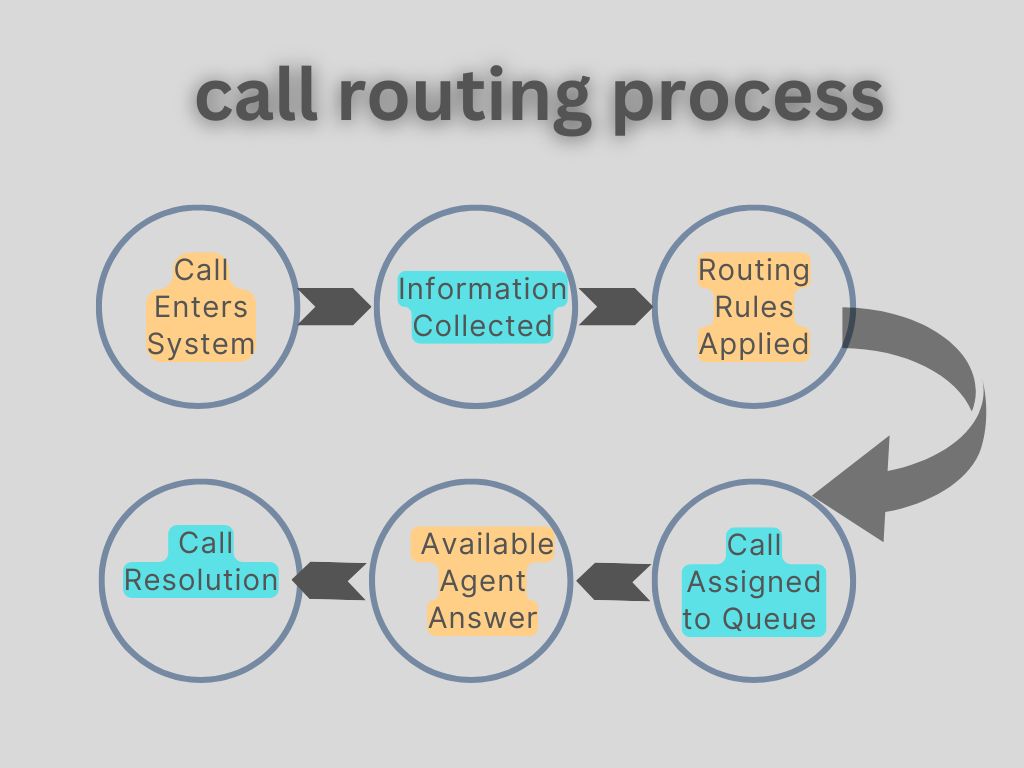
1. Call Initiation
When a customer dials your business number, the call enters your cloud-based phone system (VoIP) through your service provider. This system acts as the entry point, accepting the call and preparing it for routing.
2. Caller Identification and Data Collection
The system immediately activates Interactive Voice Response (IVR) or an auto-attendant to gather critical data: caller intent via menu selections, customer identity using caller ID and CRM integration, and contextual data like language preference or urgency.
3. Intelligent Routing Algorithm Application
Sophisticated Automatic Call Distribution (ACD) engines apply predefined rules to prioritize and route calls based on agent availability, skill-based routing, time-based rules, and priority status.
4. Optimal Agent or Department Assignment
Once routed, the call enters a queue tailored to the customer's needs. The system prioritizes queues, balances workloads, and connects in real time to the agent's device.
5. Call Resolution and Enhanced Customer Satisfaction
The agent receives the call with contextual data displayed on their dashboard, enabling personalized service. Effective routing ensures higher first-call resolution, shorter wait times, and customer retention.
Key Benefits of Call Routing
For Businesses
- Operational Efficiency: Automated call routing reduces average handling times
- Scalability: Seamlessly scale operations to handle fluctuating call volumes
- Expertise Alignment: Skill-based routing ensures each query is directed to the right agent
For Call Center Agents
- Reduced Stress: Intelligent routing balances workloads
- Higher Productivity: Automation eliminates manual call transfers
- Improved First-Call Resolution: Agents handle calls suited to their skillsets
For Customers
- Reduced Wait Times: Automated systems cut down on hold times
- Consistent Service Quality: Customers are matched with the most qualified agent
- Elimination of Repetition: Integrated systems share customer information before the call begins
Types of Call Routing
1. List-Based Routing
Calls are routed sequentially based on a predefined list of agents. Ideal for law firms or businesses where seniority matters.
2. Round Robin Routing
Calls are evenly distributed among agents in a loop to balance workloads. Perfect for sales teams distributing inbound leads equally.
3. Least Occupied Routing
Calls are directed to agents with the fewest active calls. Maximizes resource utilization and prevents agent burnout.
4. Time-Based Routing
Calls are routed based on business hours or geographic time zones. Ensures 24/7 support coverage.
5. Geographic Routing
Calls are routed based on the caller's location to agents best suited for regional needs. Excellent for utility companies or regional services.
6. Skills-Based Routing
Calls are intelligently matched to agents with specific skills or expertise. Improves first-call resolution rates.
7. AI-Powered Routing (Predictive Behavioral Routing)
Machine learning algorithms analyze live and historical data to predict the best agent for each call in real time. Delivers hyper-personalized experiences.
Call Routing Best Practices
- Optimize IVR Menus: Keep menus concise with 3-5 choices
- Leverage AI & Analytics: Use predictive analytics to forecast call volumes
- Prioritize Continuous Monitoring & Improvement: Review KPIs like AHT and CSAT scores
- Ensure Seamless Multi-Channel Support: Integrate with live chat, email, and social media
- Establish Rigorous Testing & Refinement of Routing Rules: Conduct A/B testing of different routing strategies
Future of Call Routing & AI Integration
1. Voice Recognition & Natural Language Processing (NLP)
Voice recognition and NLP are redefining call routing by enabling systems to understand and interpret customer intent in real time. This technology eliminates reliance on rigid IVR menus.
2. Predictive Call Routing
Predictive call routing leverages AI algorithms to proactively match customers with the most suitable agents based on historical data and real-time insights.
3. Cloud-Based Call Routing Solutions
The adoption of cloud-based call routing systems is accelerating as businesses embrace distributed workforce models. Cloud solutions support remote workforces while ensuring 24/7 service availability.

FAQs
1. What is call routing?
Call routing is an automated system that directs incoming calls to the right agent or department, improving efficiency and customer satisfaction.
2. What are the main benefits?
Key benefits include faster resolutions, shorter wait times, increased agent productivity, and improved customer experience.
3. What types of call routing exist?
Common types include skills-based, time-based, geographic, round robin, and AI-powered routing.
4. Is it difficult to implement?
Cloud-based systems are generally easy to set up. Choose a provider with strong support.
5. What ROI can I expect?
Expect improvements in customer satisfaction, agent productivity, and cost savings through increased efficiency.
Conclusion
In conclusion, call routing is a pivotal technology that transforms customer service operations by enhancing efficiency and elevating customer experiences. By leveraging AI-driven automation, businesses can streamline call management, reduce wait times, and ensure that each caller reaches the most suitable agent. As customer expectations continue to rise, adopting advanced call routing systems is crucial for gaining a competitive edge.
Call to Action: Want to optimize your call routing? Explore DialerGiants's advanced call routing solutions today!


