 DialerGiants
Introduction
2025 Call Center Trends: AI and VoIP Integration explores how converging telecommunications and artificial intelligence reshape contact center operations. In 2025, expect VoIP to be the default transport for voice while AI layers enhance routing, automation, analytics, and agent assistance. This guide helps call center managers, architects, and business leaders understand technology choices, deployment patterns, and operational trade-offs.
Why 2025 is Different: Convergence, Cloud, and Data Maturity
Three forces drive the 2025 landscape: Ubiquitous VoIP and cloud telco, AI maturity, and data availability. Together these forces enable real-time AI that attaches to VoIP sessions, transforming routing, self-service, agent support, and analytics.
Call Center Architecture Trends: Cloud-First, Microservices, and Voice as a Stream
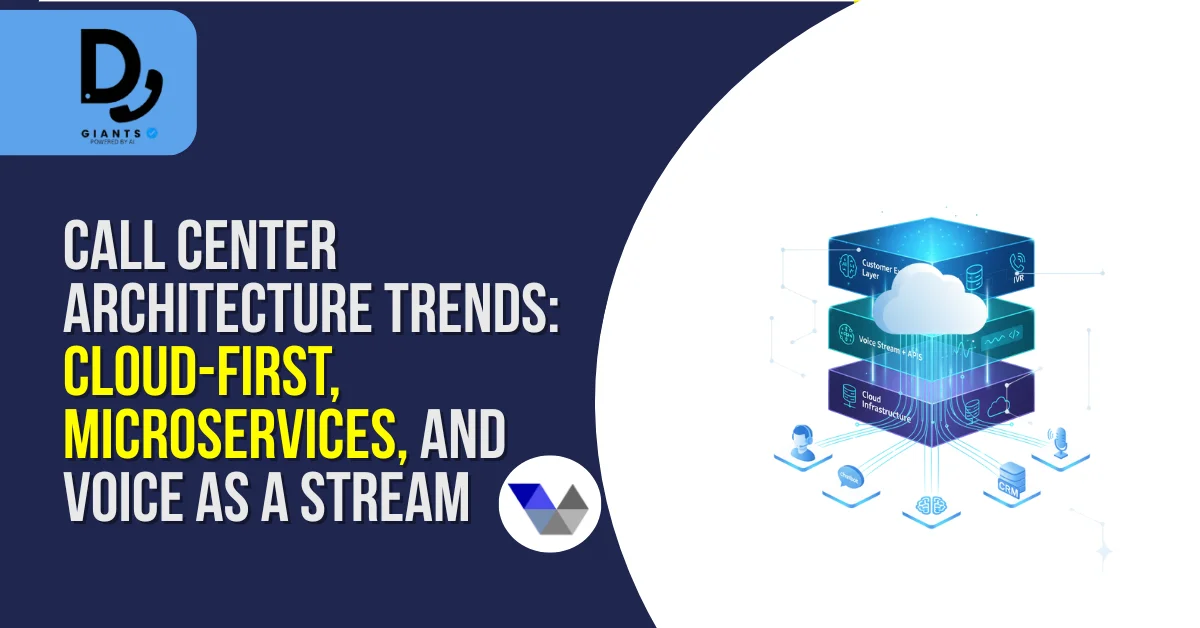
Modern contact centers are adopting cloud-native architectures and treating voice as a streamable data resource rather than isolated circuit-switching. Cloud providers provide scalable SIP trunking, containers for contact center services, and managed voice connectors. Voice as data stream enables real-time sentiment detection, compliance checks, and advanced IVR.
AI-Powered Contact Center Features to Expect in 2025
- Real-time intent detection & predictive routing: Higher first contact resolution (FCR), reduced average handling time (AHT).
- Virtual agents and blended automation: Handle complex intents across voice and chat with warm-handoff context.
- Real-time agent assistance (co-pilot): Context-aware suggestions, knowledge articles, next-best actions.
- Conversation intelligence & analytics: Automatic QA scoring, trend detection, root-cause analysis.
- Workforce optimization with ML: Predicts staffing needs and identifies coaching opportunities.
VoIP-Specific Trends and Considerations
SIP remains the backbone for carrier-grade voice; WebRTC gains traction for browser-based interactions. QoS, jitter, and low-latency media paths become operational priorities as AI performs real-time inference on call streams. Businesses increasingly buy voice from cloud brokers offering global coverage.
Security, Privacy, and Compliance for AI + VoIP
Encrypt signaling (SIP-TLS) and media (SRTP) by default. Ensure data residency controls match regulatory obligations (GDPR, CCPA). Keep auditable logs of inference outputs used for decisioning and version models for provenance.
Implementation Roadmap: Pilot → Scale → Govern
Step 1: Data readiness & integration — consolidate interaction logs, integrate CRM, clean
transcripts.
Step 2: Targeted pilot projects — real-time agent assistance, virtual agents, or predictive
routing.
Step 3: Scale thoughtfully — move to cross-queue deployments after stabilizing models.
Step 4: Governance, monitoring, and continuous improvement — monitor model drift, implement
incident response.
Operational and Human Considerations
AI changes agent roles: from rote task execution to supervision, exception handling, and empathy. Provide training on using AI recommendations. Automation should improve, not degrade, experience — provide clear opt-outs and escalation paths. Budget for licensing, media egress, and engineering.
Vendor Landscape and Integration Patterns
Two dominant patterns: UCaaS + native AI (quick to deploy, less customization) and best-of-breed integrations (more flexibility, higher engineering overhead). Choose based on price-to-customization trade-offs.
Measuring Success: KPIs that Matter in 2025
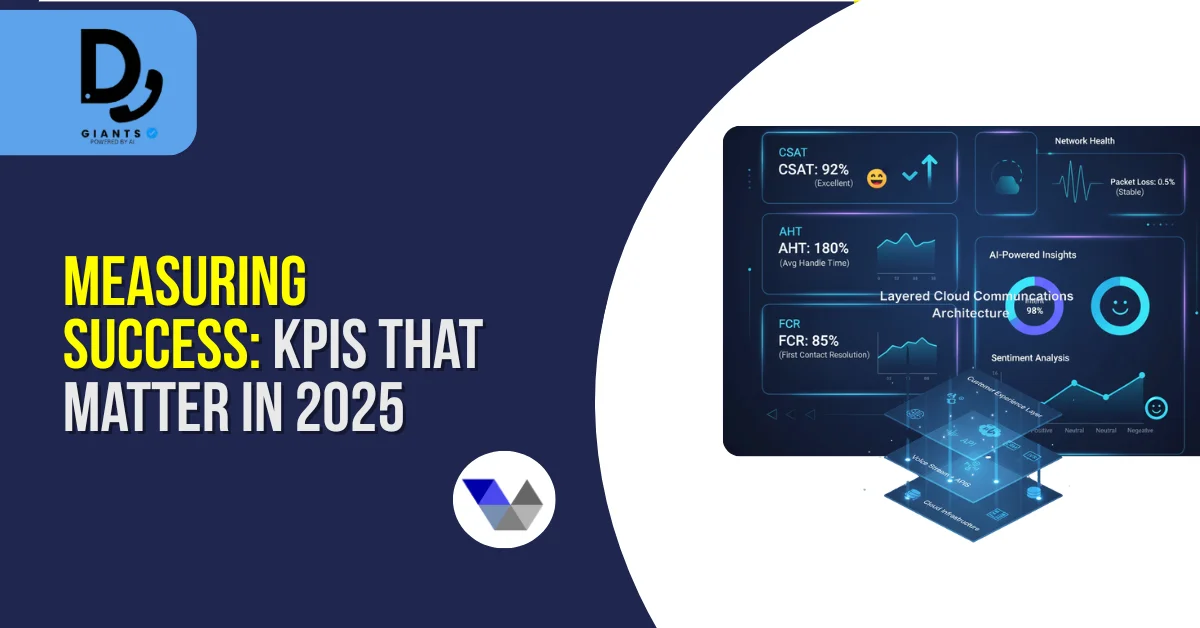
- Customer-centric: CSAT, NPS, containment rate.
- Efficiency: AHT, average speed to answer (ASA), transfer rate.
- Quality: First contact resolution, QA scores.
- AI performance: intent accuracy, false escalation rate, model latency.
- Voice transport: packet loss, jitter, MOS (Mean Opinion Score).
Common Pitfalls and How to Avoid Them
- Poor data quality: Invest in transcription quality and data pipelines.
- Over-automation: Phased automation with human-in-loop.
- Ignoring voice security: Default to SRTP/SIP-TLS, use anomaly detection.
- Vendor lock-in: Prefer modular integrations and open APIs.
Practical Checklist for 2025 AI + VoIP Rollouts
- Consolidate and label historical interaction data.
- Choose pilot use cases with clear ROI indicators.
- Ensure VoIP media is encrypted and low-latency.
- Implement real-time transcription + NLU for routing and analytics.
- Deploy virtual agents for low-complexity tasks with smooth escalation.
- Add real-time agent assist (co-pilot) and measure adoption.
- Monitor model drift and maintain governance practices.
- Train agents and update processes for changed roles.
- Track KPIs at business and model levels.
- Plan for phased scale and vendor diversification.
Future Outlook: What Comes After 2025?
- Edge inference for voice AI — reducing latency and egress costs.
- Multimodal agents — handling text, voice, and visual inputs seamlessly.
- Deeper personalization — predictive conversational strategies using unified profiles.
- Stronger regulation — new rules around voice AI transparency and automated decisioning.
FAQs
1. How will AI and VoIP integration impact call centers in 2025?
AI and VoIP integration will enhance call center efficiency by enabling intelligent call routing, real-time analytics, and automation of repetitive tasks. This combination reduces operational costs, improves agent productivity, and delivers a smoother omnichannel customer experience.
2. What are the most important AI technologies used in modern call centers?
Key AI technologies include Natural Language Processing (NLP), predictive analytics, intelligent IVR systems, virtual agents, and AI-powered speech recognition. These tools help analyze customer sentiment, predict intent, and personalize responses instantly.
3. Why is VoIP considered essential for cloud-based contact centers?
VoIP (Voice over Internet Protocol) allows flexible, high-quality, and scalable communication through the cloud. It eliminates hardware dependency, supports remote work, integrates easily with CRM tools, and ensures global accessibility—making it ideal for hybrid or virtual call centers.
4. What security measures should call centers adopt when using VoIP and AI systems?
Call centers should implement end-to-end encryption, secure SIP protocols, multi-factor authentication, and regular penetration testing. Using AI-driven fraud detection systems can also help identify unusual activities or potential data breaches in real time.
5. Will AI replace human agents in call centers by 2025?
No, AI will not replace human agents but will augment their capabilities. AI handles repetitive tasks and assists with real-time insights, while human agents manage complex, emotional, or high-value interactions—creating a balanced, hybrid workforce model.
Conclusion
2025 Call Center Trends: AI and VoIP Integration point to a future where voice and intelligence are inseparable. Voice becomes a data stream routed through secure VoIP channels; AI provides routing, automation, analytics, and agent augmentation in real time. Organizations that succeed will invest in data readiness, pilot strategic use cases, secure their voice layer, and adopt clear governance. The result: more efficient operations, better customer experiences, and measurable business value.