 DialerGiants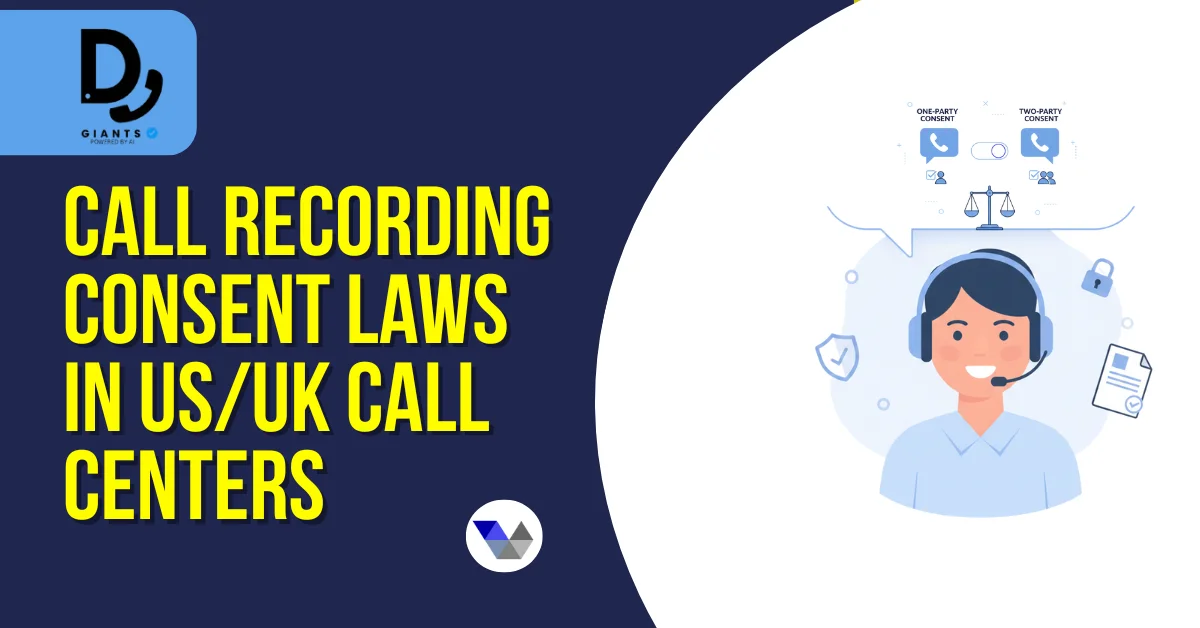
Why consent and compliance matter for call centers
Recording calls can improve quality, training, and dispute resolution. Yet, improper recording can lead to criminal liability, civil claims, regulatory fines, and reputational damage. In the US, federal and state laws intersect; in the UK, data protection law and sector rules shape obligations. Businesses must balance operational needs with legal duties and customer expectations.
United States — federal law plus state variations
Federal baseline — one-party consent under the Wiretap Act
At the federal level, the Electronic Communications Privacy Act (ECPA) and the Federal Wiretap Act allow recording if one party consents. That means a business or agent participating in the call can generally record without informing the other party under federal law. However, state laws can be stricter.
State rules — single-party vs all-party (two-party) consent
States vary. Most states are single-party consent jurisdictions, but several require all parties to consent to recording. Well-known all-party (two-party) consent states include California, Florida, Illinois, Maryland, Massachusetts, and a few others. If a call involves parties in different states, choice-of-law and the locales of parties can affect which law applies.
Interstate calls and choice of law complications
Interstate calls are common in call centers. Courts may apply the law of the state with the "strongest" connection to the communication. Leading cases show that recording practices must consider where customers and agents are located, and call centers often adopt the strictest applicable standard (i.e., treat calls as all-party) to minimize risk.
Practical US compliance tips
- Detect caller locale using ANI, account metadata, or IVR prompts
- Default to disclosure: use announcement "This call may be recorded..."
- For all-party states, use IVR prompts requiring key press or verbal consent
- Log consent with timestamps and IVR responses
- Regular legal review for state law changes
United Kingdom — data protection, transparency and purpose
UK legal framework — Data Protection Act, GDPR and ICO guidance
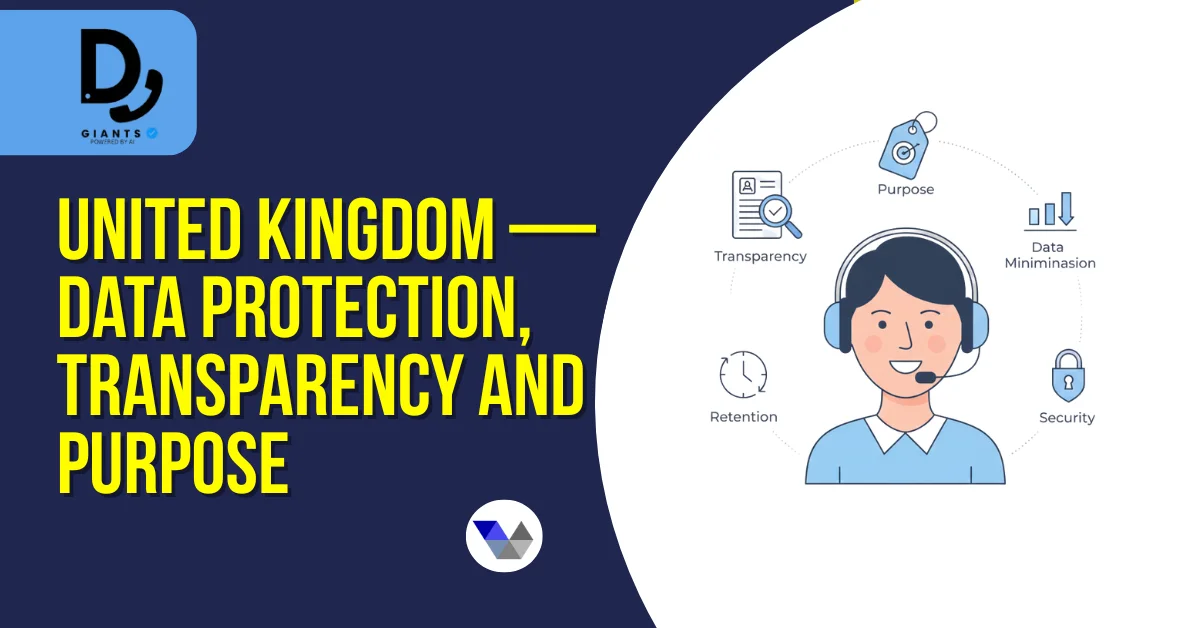
In the UK, call recording is governed mainly by data protection law (UK GDPR and the Data Protection Act) and by interception law where applicable. Recording is legal where you have a lawful basis and comply with data protection principles: transparency, purpose limitation, data minimisation, security, and retention controls. The Information Commissioner’s Office (ICO) provides specific guidance on recording conversations.
Consent vs other lawful bases
Under UK GDPR, consent is one lawful basis but not the only one. Many call centers rely on legitimate interests for quality monitoring and fraud prevention, provided they conduct a Legitimate Interests Assessment (LIA) and offer appropriate safeguards. Where processing is based on legitimate interests, organisations must still provide clear privacy notices and a simple opt-out mechanism where appropriate.
Transparency and information requirements
If you record calls, you must inform callers (and agents) about: why recordings are made (training, dispute resolution, compliance), how recordings will be used and who will access them, retention period and data subject rights. This information is typically given via an automated pre-call announcement and reinforced in a privacy notice.
Industry-specific rules (e.g., financial services)
Regulated sectors (financial services, telemedicine, legal advice) often have stricter rules requiring recording for regulatory purposes or imposing additional safeguards. The FCA has requirements for recording and storing regulated communications. Call centers serving regulated clients should map sectoral obligations and include them in policies.
Consent models — operational meaning and examples
One-party consent (US federal) — passive recording without notice
Under one-party models, the participating agent's implied consent is often enough. However, relying only on one-party consent leaves operational risk where a state's law requires all-party consent. Example: An agent in Texas (one-party) records a call from a California resident (all-party). Without notifying the caller, the business risks liability under California law.
All-party (two-party) consent — explicit agreement by everyone
All-party consent requires that every call participant be informed and agree. For inbound calls, this is frequently achieved via an IVR message requiring an affirmative response. Example script: "This call may be recorded for training and quality purposes. If you do not consent, please hang up or press 2 to speak to an unrecorded line."
UK model — transparency with lawful basis
In the UK, the emphasis is on clear notice and a lawful basis (often legitimate interests). While explicit verbal consent may be used, many businesses rely on transparency plus LIA documentation and safeguards.
Data protection and security controls for recorded calls
Minimise and segment data: Only record what you need. Redact or avoid recording sensitive
personal data where possible.
Secure storage and access controls: Store recordings encrypted at rest and in transit. Limit
access with role-based controls and log access events.
Retention policies: Define short, justified retention periods. For routine quality recordings
a short window (e.g., 30–90 days) is common; regulatory-required records may need longer retention. Apply
automated deletion.
Data subject rights and disclosure: Prepare for subject access requests; maintain processes
to locate and export customer recordings.
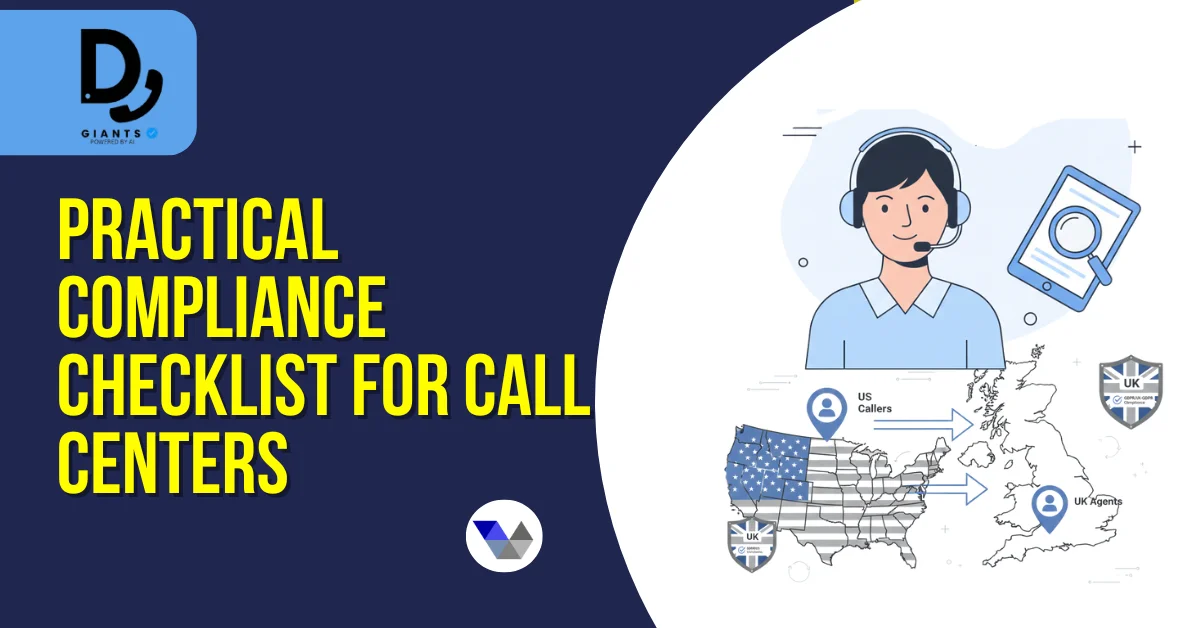
Practical compliance checklist for call centers
- Map jurisdictions: Identify where callers and agents are located
- Default to transparency: Use pre-call announcement on all lines
- Implement consent capture for all-party states with IVR logging
- Configure dialer routing based on caller location
- Limit recording scope; avoid capturing unnecessary data
- Secure recordings with encryption and access controls
- Set retention with automated deletion
- Document lawful basis (UK) and maintain LIAs
- Train staff on scripts and consent refusal handling
- Schedule periodic legal review
Responding to refusals and handling edge cases
What to do if a caller refuses consent: Provide an unrecorded channel or decline to proceed
where recording is necessary, and document the choice.
Calls involving minors or vulnerable persons: Avoid recording sensitive categories without
explicit consent. Consider alternative verification processes.
Publication and third-party sharing: Publishing recordings requires extra care; identify
legal bases and anonymise or redact where appropriate.
Enforcement, penalties and civil exposure
Violations can lead to criminal penalties (in some US states), heavy civil damages, regulatory fines under data protection law (ICO), and reputational loss. Class actions and statutory damages have been pursued under state wiretap laws in the US, and GDPR fines can apply in the UK for poor data handling. Maintain insurance and legal advice for risk mitigation.
Technology controls that simplify compliance
- Geo-aware IVR: Plays consent scripts based on caller location
- Consent logging: Stores timestamps, IVR tokens, agent confirmations
- Selective recording: Record only required legs or channels
- Redaction and transcription policies: Redact PII before sharing
- Retention automation: Auto-delete recordings after retention period
Key takeaways and recommended next steps
- Know the law where your callers and agents are located. US state variation matters; adopt the strictest applicable standard where possible.
- Use clear, documented consent or legitimate interest assessments in the UK and provide transparent privacy notices.
- Implement operational controls (IVR, logging, routing) and technical safeguards (encryption, retention automation).
- Train staff and document policies — compliance is an organisational task, not a single team's job.
- Review regularly — laws and guidance evolve; perform legal reviews and update scripts and systems accordingly.
FAQs
Is it legal for call centers to record calls without telling the customer?
In the US, federal law allows one-party consent, but many states require all-party consent, meaning everyone must be informed and agree. In the UK, call recording must always be transparent, and callers must be notified under data protection rules, even where explicit consent is not used.
What happens if a call center records a call without proper consent?
Penalties may include criminal charges (in some US states), civil lawsuits, regulatory fines under GDPR in the UK, and reputational damage. Customers may file complaints or seek compensation.
How should call centers handle interstate calls in the US?
Because different states have different recording laws, call centers often adopt the strictest applicable standard—treating calls as requiring all-party consent—to avoid conflict-of-law issues.
Do call centers in the UK always need explicit consent to record calls?
Not always. Many call centers rely on legitimate interests as a lawful basis for recording, but they must still provide clear notice explaining the purpose and offer appropriate safeguards.
What operational controls help ensure compliance with recording laws?
Common controls include automated consent announcements, IVR yes/no prompts, call routing by location, consent logging systems, encryption of recordings, role-based access control, and automated retention and deletion policies.
Conclusion
Call recording is a powerful tool for improving customer experience, training, and dispute resolution, but it also carries significant legal and compliance responsibilities. In the United States, call centers must navigate both federal one-party consent rules and stricter state-level all-party consent laws, especially for interstate calls. In the United Kingdom, compliance focuses on transparency, lawful bases for processing under UK GDPR, and strong data protection measures. The most reliable strategy is to adopt a cautious, transparent approach—use clear pre-call announcements, log consent, protect recordings, and regularly review evolving legislation. By implementing structured procedures, tailored scripts, and secure technology, call centers can protect customer trust, reduce legal risk, and operate confidently across US and UK jurisdictions.